
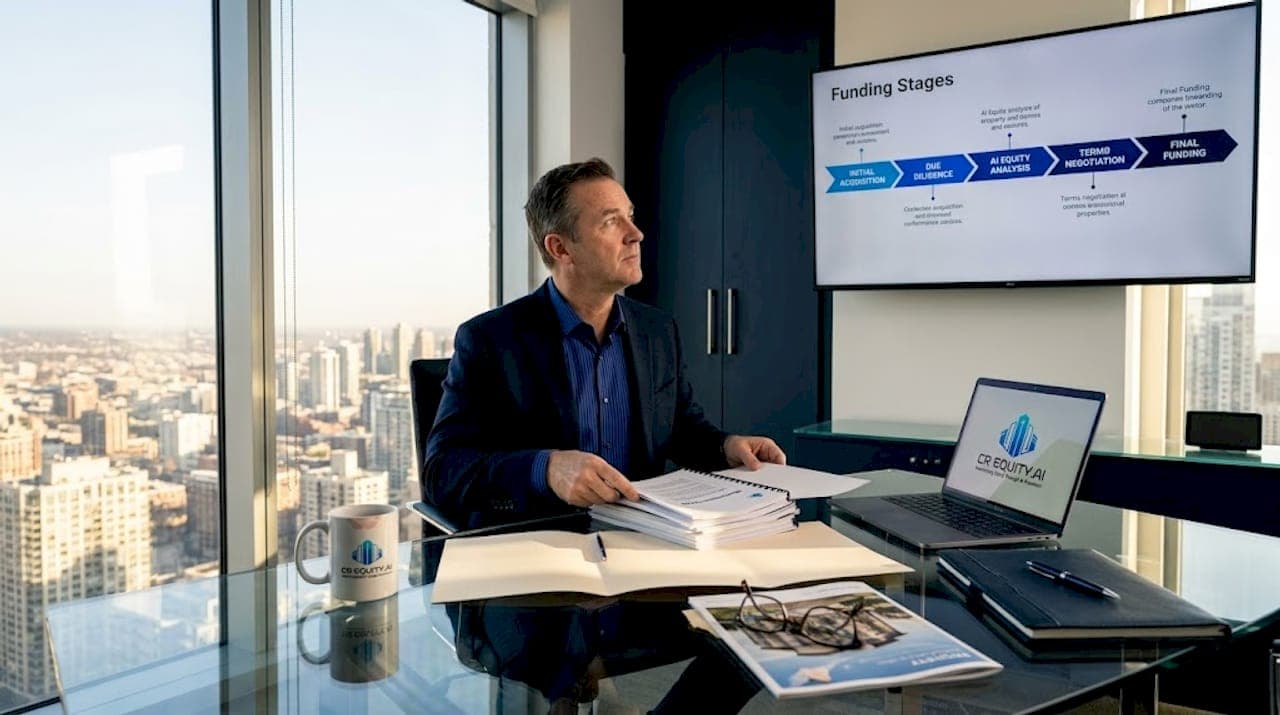
Incomplete funding applications kill deals. A missing proforma, an outdated appraisal, or a vague exit strategy can push a lender to pass on your project in minutes, forcing you back to square one while a competing developer closes. Commercial real estate investors and developers who treat funding preparation as an afterthought routinely face delayed timelines, higher borrowing costs, and outright rejections. This guide delivers a structured, step-by-step approach to assembling your documentation, packaging your project, and navigating edge cases so you can secure capital efficiently and move forward with confidence.
Table of Contents
- Understanding real estate funding basics
- Assembling your documentation and financials
- Presenting your project for funding approval
- Prepping for edge cases: New developments, soft costs, and reserves
- Why most developers underestimate funding preparation
- How CR Equity AI can help you prepare and win funding
- Frequently asked questions
Key Takeaways
| Point | Details |
|---|---|
| Gather all documents | You need years of tax returns, financials, business plan, and studies ready before applying. |
| Customize your presentation | A strong investor package with visuals, timelines, and clear exit strategies heightens your approval odds. |
| Budget accurately for development | Expect to need high equity, interest reserves, and factor in soft costs for ground-up projects. |
| Know your funding options | Understand the trade-offs between debt and equity to choose the best capital stack for your deal. |
Understanding real estate funding basics
With the stakes set, let's clarify the basics so you know exactly what to expect and what you need.
Real estate funding falls into two primary categories: debt and equity. Understanding both is essential before you approach any lender or investor.
Debt financing means borrowing capital with an obligation to repay principal plus interest on a fixed schedule. Bank loans, CMBS (commercial mortgage-backed securities), bridge loans, and construction financing all fall here. Lenders evaluate debt deals using metrics like DSCR (debt service coverage ratio), LTV (loan-to-value), and NOI (net operating income). Debt vs. equity structures differ significantly: debt typically costs 5 to 7% but demands strong DSCR and LTV ratios, while equity dilutes ownership but carries no fixed payment obligation, making it better suited for higher-risk development scenarios.
Equity financing involves raising capital from partners or investors in exchange for an ownership stake. Equity partners share in profits and losses, so they scrutinize your project's upside potential, your track record, and your exit strategy more intensely than a traditional lender would.
Most commercial projects use a capital stack, which layers multiple funding sources. A typical stack includes senior debt at the base (lowest risk, first repaid), mezzanine debt in the middle, and equity at the top (highest risk, highest return potential). Knowing where your project sits in this stack determines which documents and metrics matter most.
Typical funding channels include:
- Conventional bank loans and SBA programs
- Private and bridge lenders
- CMBS and agency financing
- Equity partners, family offices, and institutional investors
- Crowdfunding and syndication platforms
Regardless of channel, required documents for real estate financing follow a consistent pattern. Key documents include three years of tax returns, financial statements, proformas, business plans, market studies, appraisals, and due diligence reports. Lenders want to verify income stability, asset quality, and repayment capacity before committing capital.
Core documents to gather before seeking funds:
- Three years of personal and business tax returns
- Current profit and loss (P&L) statements and balance sheets
- Detailed proformas with income and expense projections
- Property appraisals and environmental reports
- Market studies and comparable sales data
- Entity formation documents and operating agreements
- Personal financial statements for all principals
| Document category | Purpose | Who requires it |
|---|---|---|
| Tax returns (3 years) | Income verification | Debt and equity |
| Proforma | Return projections | Debt and equity |
| Appraisal | Asset value confirmation | Primarily debt |
| Market study | Demand validation | Primarily equity |
| Business plan | Strategy overview | Equity and SBA |
Gathering these materials before your first lender conversation signals professionalism and dramatically shortens the review cycle.
Assembling your documentation and financials
Now that you know what lenders and investors want, it's time to assemble the paperwork that proves your case.

A strong financial package is not just about having the right documents. It's about presenting them in a format that is clear, consistent, and credible. Lenders process dozens of submissions weekly. A disorganized package creates friction and signals risk.
Step-by-step process for gathering your documentation:
- Pull three years of personal and entity tax returns. Reconcile any discrepancies between reported income and bank deposits before submission.
- Prepare current P&L statements and balance sheets. Use a CPA-reviewed format wherever possible, as self-prepared statements receive more scrutiny.
- Build a detailed proforma. Model conservative, base, and optimistic scenarios. Lenders focus on the conservative case, so make sure it still supports debt service.
- Commission a current appraisal from a licensed MAI-certified appraiser. Outdated appraisals (older than six months) are routinely rejected.
- Order a market study from a recognized third-party firm. This validates your rent assumptions and absorption projections with independent data.
- Compile entity documents: articles of organization, operating agreements, and any existing loan agreements or liens on the property.
- Prepare personal financial statements for all principals with ownership above 20%. Include schedules of real estate owned with current values and mortgage balances.
Key documents include tax returns, financial statements, proformas, business plans, market studies, appraisals, and due diligence reports, and the quality of each one directly affects your approval odds.
Comparison: Required documents for debt vs. equity funding
| Document | Debt funding | Equity funding |
|---|---|---|
| Tax returns (3 years) | Required | Required |
| Proforma | Required | Required |
| Appraisal | Required | Preferred |
| Market study | Preferred | Required |
| Business plan | Sometimes required | Always required |
| Exit strategy | Required | Critical |
| Track record summary | Preferred | Required |
When presenting your financial package, transparency builds trust. Do not hide a vacancy problem or a cost overrun in a footnote. Lenders and investors find issues during due diligence anyway. Proactively flagging a challenge and explaining your mitigation plan demonstrates competence, not weakness.
Review your investor packages and documentation structure carefully before submission. A well-organized package with a clear table of contents, tabbed sections, and a one-page executive summary at the front signals that you respect the reviewer's time.
Your business plan essentials should address market positioning, competitive advantages, the management team, and a realistic timeline from groundbreaking to stabilization.
Pro Tip: Include a recent third-party market study and a current appraisal even when they are not explicitly required. Lenders who receive both documents upfront move faster because they do not need to request them separately, which can save two to three weeks in the review process.
Presenting your project for funding approval
With paperwork in hand, the next step is to present your project in a format that grabs attention and builds confidence.
A funding package is more than a collection of documents. It is a persuasion tool. The difference between a barebones submission and a compelling investor deck is the difference between a phone call and a pass email.
A barebones package typically includes a one-page summary, a basic proforma, and a site address. A compelling package includes professional renderings, a phased timeline with milestones, a clear exit strategy with comparable transactions, and a track record summary with photos of completed projects. The latter builds confidence. The former raises questions.
Must-have components for a strong project package:
- Executive summary (one page, no more)
- Project narrative with market context and competitive positioning
- Site plan and architectural renderings or photos
- Detailed proforma with sensitivity analysis
- Construction timeline with phased milestones
- Exit strategy with comparable sales or refinance data
- Sponsor bio and track record with completed project photos
- Sources and uses table with clear equity contribution breakdown
"First impressions in a pitch are formed within the first 90 seconds of review. A clean executive summary and professional visuals determine whether a lender reads further or sets the package aside."
For developers, demonstrating a track record is critical. First-time sponsors face higher skepticism, so starting with smaller or phased projects reduces perceived risk. Including visuals, site plans, timelines, and exit strategies in your package directly addresses the questions investors ask before they ask them.
First-time developers should consider partnering with an experienced co-sponsor or guarantor. This arrangement allows you to access institutional capital while building your own track record. Lenders see the experienced party as a risk mitigant, which can reduce equity requirements or improve pricing.
Use market intelligence resources to support your rent assumptions and absorption timelines with current data. Investors discount projections that are not anchored to verifiable market evidence.
Pro Tip: Site plans and financial timeline visuals are not cosmetic. They allow investors to mentally walk through the project and identify risks before asking questions. A sponsor who anticipates questions through clear visuals closes faster than one who answers them reactively.
International project requirements add layers of complexity around currency risk, regulatory compliance, and cross-border entity structures. Address these proactively in your package if your project has any international components.
Prepping for edge cases: New developments, soft costs, and reserves
Even seasoned pros trip up on requirements for new construction. Here's how to avoid the most expensive mistakes.
Ground-up development financing operates under stricter standards than acquisition or value-add deals. Lenders carry more risk because there is no existing cash flow to service debt during construction. This reality drives higher equity requirements, longer reserve periods, and pre-leasing thresholds that must be met before a construction loan funds.
Ground-up developments typically require 35% equity, interest reserves covering 12 to 24 months, and pre-leasing commitments of at least 50% before lenders will advance funds. Missing any of these thresholds results in a declined application or a retrade on terms.
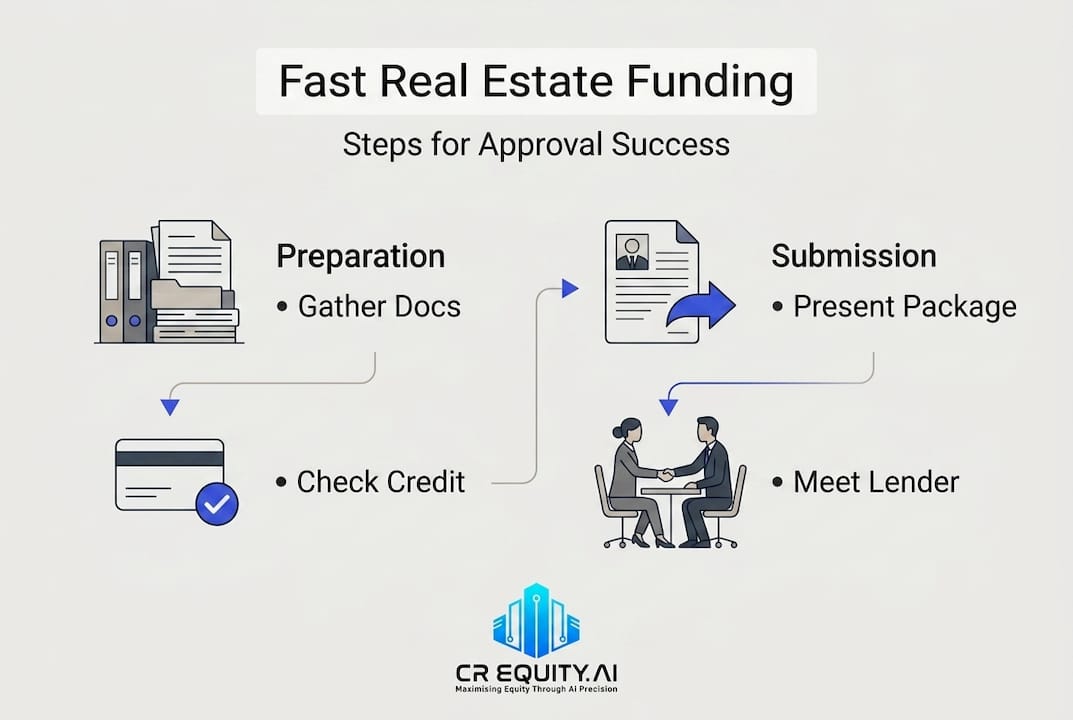
Key thresholds for ground-up development approval:
| Requirement | Typical threshold | Why it matters |
|---|---|---|
| Equity contribution | 35% minimum | Reduces lender exposure |
| Interest reserves | 12 to 24 months | Covers debt service during construction |
| Pre-leasing commitment | 50% minimum | Validates demand before funding |
| Construction contingency | 10 to 15% of hard costs | Buffers cost overruns |
| Soft cost budget | 15 to 25% of total costs | Covers design, permits, legal |
Common soft cost pitfalls developers overlook:
- Architectural and engineering fees that escalate through design revisions
- Permitting and entitlement costs that extend timelines by months
- Legal fees for entity formation, loan documentation, and title work
- Environmental studies and geotechnical reports required by lenders
- Marketing and leasing commissions during the pre-opening period
- Carrying costs on land during the entitlement process
"Soft cost overruns are the leading cause of construction loan defaults. A budget that underestimates design fees, permitting delays, or legal costs by even 5% can create a funding gap that stalls an entire project."
Explore equity requirements for developments before you finalize your capital stack. Knowing the minimum equity threshold for your project type prevents you from approaching lenders with an undercapitalized deal, which wastes time and damages your credibility.
For faster timelines, review quick project funding tips that address how pre-organized documentation and lender pre-qualification can compress approval cycles significantly. The developers who close fastest are those who treat lender requirements as a checklist to complete before the first conversation, not after.
Accurate cost budgeting requires input from a licensed general contractor with experience in your project type and local market. A preliminary budget from a contractor who has not reviewed the plans is not sufficient for a construction loan application. Lenders want a detailed line-item budget with a signed contract or letter of intent from your GC before they issue a term sheet.
Why most developers underestimate funding preparation
Having explored the practical steps and pitfalls, let's address the real reason these issues persist and how you can rise above the competition.
Most developers underestimate preparation because they treat the funding process as a transaction rather than a due diligence exercise. They assume a strong deal sells itself. It does not. A lender reviewing 50 applications in a week will not spend time reconstructing a disorganized financial package. They move to the next deal.
The real cost of poor preparation is not just a single rejection. It is the two to three months lost while you reassemble documents, re-engage lenders, and watch your project timeline slip. In a rising cost environment, that delay can erase your projected returns entirely.
AI automation, including the tools built into platforms like CR Equity AI, accelerates document processing and lender matching. But automation cannot fix a proforma built on inflated rent assumptions or a business plan that lacks a credible exit strategy. Technology amplifies the quality of what you submit. It does not substitute for substance.
The most effective discipline is to review your own package the way an investor would. Scrutinize every number. Question every assumption. If you cannot defend a projection in a five-minute phone call, revise it before submission. Developers who apply this standard consistently close faster and on better terms. Review fast-track approval lessons to see how preparation directly compresses timelines.
How CR Equity AI can help you prepare and win funding
Ready for your next step? Here's how the right partner can simplify and accelerate your funding experience.
CR Equity AI combines machine-learning underwriting, automated document intelligence, and real-time lender matching to reduce the friction that slows most funding applications. The platform pre-screens your submission against lender criteria before you apply, flags documentation gaps, and delivers multiple competitive offers in minutes rather than weeks.
Whether you are pursuing bridge financing, construction loans, or working capital solutions, explore all funding services to identify the program that fits your project type and capital stack. For a fast, personalized estimate, get a personalized loan quote using the CR Equity AI loan calculator. Preparation and the right platform together create the shortest path from application to approval.
Frequently asked questions
What documents do I need for real estate funding approval?
You'll need three years of tax returns, financial statements, proformas, a business plan, market studies, appraisals, and due diligence reports. Completeness and organization matter as much as the documents themselves.
How much equity do I need for a ground-up development?
Most projects require at least 35% equity and 12 to 24 months of interest reserves for lender approval. Pre-leasing commitments of 50% or more are also commonly required before funds are advanced.
What's the difference between debt and equity funding?
Debt means borrowing with fixed repayment obligations and lower cost, typically 5 to 7%, while equity trades ownership for capital with no fixed payments, making it better suited for higher-risk development scenarios.
What is a proforma and why is it important?
A proforma is a financial projection that models a project's income, expenses, and net returns over a defined period. Lenders and investors use it to assess whether projected cash flows support debt service and deliver acceptable returns.
How can technology speed up real estate funding?
AI-driven platforms automate document review, flag missing items, and match borrowers to lenders whose criteria align with the project profile. This reduces approval timelines from weeks to days and minimizes back-and-forth requests during underwriting.
Recommended
- How to Get a Commercial Real Estate Loan in 3 Days | CR Equity AI | CR Equity AI
- Fast Business Funding & Business Loan Fast Approval | AI Business Loan | CR Equity AI | CR Equity AI
- Fast, Direct Lending You Can Trust at CR Equity | CR Equity AI
- Commercial Real Estate Loans, Bridge & Refinance | Business Financing | CR Equity AI