Regulatory implications on AI + TOKENIZATION
CEO of CR Equity Ai
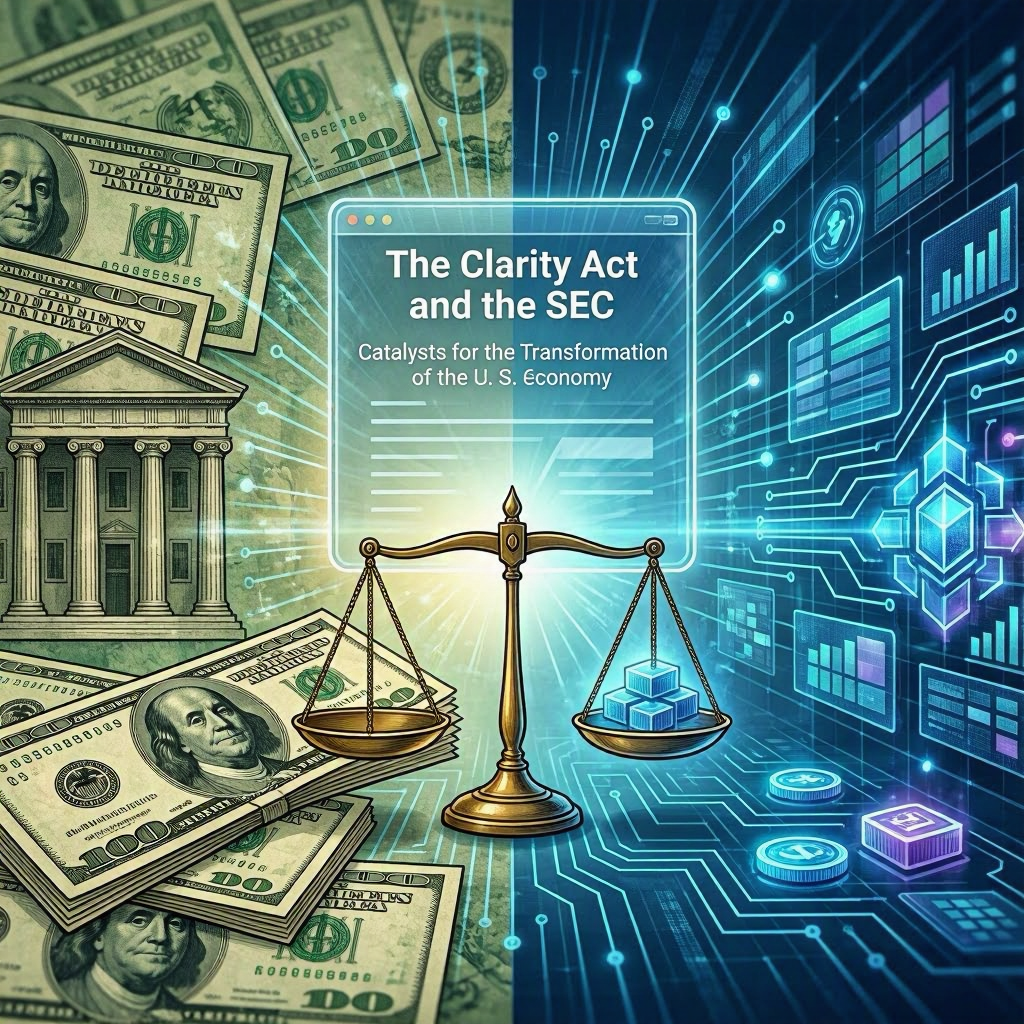
In recent years, the United States has witnessed a paradigm shift in its financial ecosystem. The transition from a fiat-dominated economy to a digital-first framework is no longer a distant vision but a present reality. Central to this transformation are legislative frameworks like the Clarity Act and regulatory bodies such as the U.S. Securities and Exchange Commission (SEC). These entities are not just observers but active architects of this new economic era.
This blog post dives into the significance of the Clarity Act, the role of the SEC, and how these forces are shaping the future of the U.S. economy. We’ll also explore how companies like CR Equity Ai are leveraging artificial intelligence (AI) to accelerate this transformation, providing real-world solutions that bridge traditional and digital financial systems.
Understanding the Clarity Act and Its Implications
The Clarity Act is a pivotal piece of legislation aimed at providing regulatory certainty for digital assets and blockchain technologies. As cryptocurrencies and blockchain-based solutions gained mainstream traction, the lack of clear regulatory guidelines created confusion for innovators, investors, and regulators alike. The Clarity Act was introduced to address this gap, offering a structured framework for classifying digital assets and establishing their compliance requirements.
Key Objectives of the Clarity Act:
- Defining Digital Assets: The act provides a clear definition of what constitutes a digital asset, distinguishing between securities, commodities, and utility tokens.
- Regulatory Transparency: By delineating the roles of regulatory bodies like the SEC and the Commodity Futures Trading Commission (CFTC), it eliminates jurisdictional ambiguities.
- Encouraging Innovation: With clearer guidelines, innovators can develop blockchain-based solutions without fear of unknowingly violating securities laws.
- Investor Protection: The act ensures that investors in digital assets are afforded the same protections as those in traditional financial markets.
By removing regulatory uncertainty, the Clarity Act has become a cornerstone for fostering innovation in the digital economy while maintaining safeguards against fraud and abuse.
The Role of the SEC in the Digital Economy Transformation
The U.S. Securities and Exchange Commission (SEC) has been at the forefront of regulating the financial markets for decades. As the digital economy evolves, so does the SEC’s mandate to oversee these emerging markets. The SEC’s role in this transformation is multifaceted, encompassing enforcement, guidance, and collaboration.
The SEC’s Impact on Digital Assets
- Regulatory Oversight: The SEC ensures that Initial Coin Offerings (ICOs), Security Token Offerings (STOs), and other blockchain-based fundraising mechanisms comply with federal securities laws.
- Investor Protection: The SEC actively pursues fraudulent schemes in the cryptocurrency space to protect investors from scams and Ponzi schemes.
- Guidance for Compliance: Through initiatives like the Strategic Hub for Innovation and Financial Technology (FinHub), the SEC provides resources and guidance for companies navigating the digital asset landscape.
For more information on the SEC’s role in regulating digital assets, visit SEC.gov.
From Fiat to Digital: A New Economic Framework
The transition from fiat to digital is not merely about replacing physical currency with digital tokens; it’s about reimagining how value is created, transferred, and stored in an increasingly interconnected world.
Key Drivers of This Transformation:
- Blockchain Technology: Blockchain serves as the backbone of this transformation, enabling secure, transparent, and decentralized transactions.
- Central Bank Digital Currencies (CBDCs): Governments, including the U.S., are exploring CBDCs to modernize monetary policy and enhance financial inclusion.
- Tokenization of Assets: Real estate, art, and even intellectual property can now be tokenized, making them more accessible and liquid.
- Decentralized Finance (DeFi): DeFi platforms are democratizing access to financial services by removing traditional intermediaries.
This shift is not without its challenges—regulatory hurdles, technological barriers, and public skepticism are just some of the issues that need to be addressed. However, with frameworks like the Clarity Act and proactive oversight by agencies like the SEC, these challenges are becoming more manageable.
CR Equity Ai: Bridging Innovation and Regulation
As industries navigate this seismic shift, companies like CR Equity Ai are stepping up to provide real-world AI solutions that facilitate the transition from fiat to digital economies. CR Equity Ai is at the intersection of artificial intelligence, finance, and blockchain technology, offering tools that help businesses comply with regulations while unlocking new opportunities in the digital economy.
How CR Equity Ai is Driving Transformation:
- Regulatory Compliance Tools: By leveraging AI, CR Equity Ai helps companies navigate complex regulatory landscapes like those outlined by the Clarity Act and enforced by the SEC.
- Risk Management Solutions: AI-powered analytics identify potential risks in digital asset portfolios, offering actionable insights for better decision-making.
- Market Insights: Through advanced data analytics, CR Equity Ai provides businesses with real-time market intelligence to capitalize on emerging trends in the digital economy.
- Tokenization Platforms: CR Equity Ai enables businesses to tokenize assets seamlessly while ensuring compliance with all relevant regulations.
By integrating AI into their operations, CR Equity Ai is not just adapting to the digital economy but actively shaping its future.
Conclusion: A Collaborative Path Forward
The transformation of the U.S. economy from fiat to digital is a complex yet inevitable journey. Legislation like the Clarity Act and regulatory oversight by institutions like the SEC are paving the way for a more transparent, innovative, and inclusive financial system.
Companies like CR Equity Ai demonstrate how technology can bridge the gap between regulation and innovation, ensuring that this transformation benefits all stakeholders—from businesses to consumers to regulators.
As we move forward into this new era, collaboration between lawmakers, regulators, innovators, and consumers will be essential. Together, we can build a digital economy that is not only efficient but also equitable and secure.
For more information on how the SEC is shaping the future of digital assets and financial technology, visit SEC.gov. And to learn more about how CR Equity Ai is driving innovation in this space, stay tuned for updates on their groundbreaking solutions.
The future is digital—and it’s happening now. Are you ready?
Contact us at info@crequity.ai to find out more on how we are shaping private investment.